
UXO and mine clearance in Homs
Explosive ordnance risk management in Syria – DEMINETEC GroupUXO, ERW and mine clearance in Homs
The DEMINETEC Group provides explosive ordnance risk management to public and private clients with projects in Homs, Syria: historical desk study, non-technical and technical survey, UXO survey, battle area clearance, mine clearance and EOD support. The group has worked in 34 countries and operates to the International Mine Action Standards (IMAS), the requirements of the national authorities and the contract specifications.
In short.
- The 2011–2014 siege of Homs, the 2012 assault on Baba Amr and the siege of al-Waer until 2017 left explosive ordnance in the city.
- Tank, artillery, rocket and mortar rounds and aircraft bombs remain in rubble; the wider governorate also holds mines, many improvised, and IEDs.
- The Syrian National Mine Action Centre and UNMAS coordinate survey and clearance; operators are accredited against IMAS while national standards are in draft.
Historical UXO context of Homs
Homs saw three years of urban siege. From May 2011 to May 2014, Syrian government forces fought opposition groups for the city, shelling Baba Amr in February 2012 and striking the Old City, Khalidiya, Qusour and Jouret al-Shayah with aircraft, tanks and artillery in October 2012. The separate district of al-Waer remained besieged until 21 May 2017. Beyond the city, Mine Action Review records that the Syrian government laid mines along the border with Lebanon in 2012.
UN-Habitat's 2014 profile of the Old City covered neighbourhoods including Al-Hamidiya, Bab Houd, Bab Tadmor, Jouret al-Shayah, Al-Qusour and Al-Khalidiya, and called the risk of unexploded items extremely alarming. A 2026 UNOPS notice citing the Mine Action Area of Responsibility recorded 125 explosive ordnance accidents and more than 249 casualties in 14 Homs sub-districts between 8 December 2024 and 30 May 2026. Mine Action Review lists HALO, Norwegian People's Aid, Safety Solutions and Syria Civil Defence units operating in Homs in 2025.
UN-Habitat estimated that, of 151,000 residential and commercial units in the Old City area, 37,700 were heavily damaged or destroyed and 66,500 partially damaged, with electricity, water and sewage networks affected and streets blocked by rubble. Rebuilding housing and utilities therefore means moving debris that may contain unexploded shells. Energy assets were also exposed: a pipeline carrying oil to the Homs refinery was blown up on 8 December 2011. In 2026, eleven sub-districts, among them Tadmor, Ar-Rastan and Talbiseh, still had no survey data.
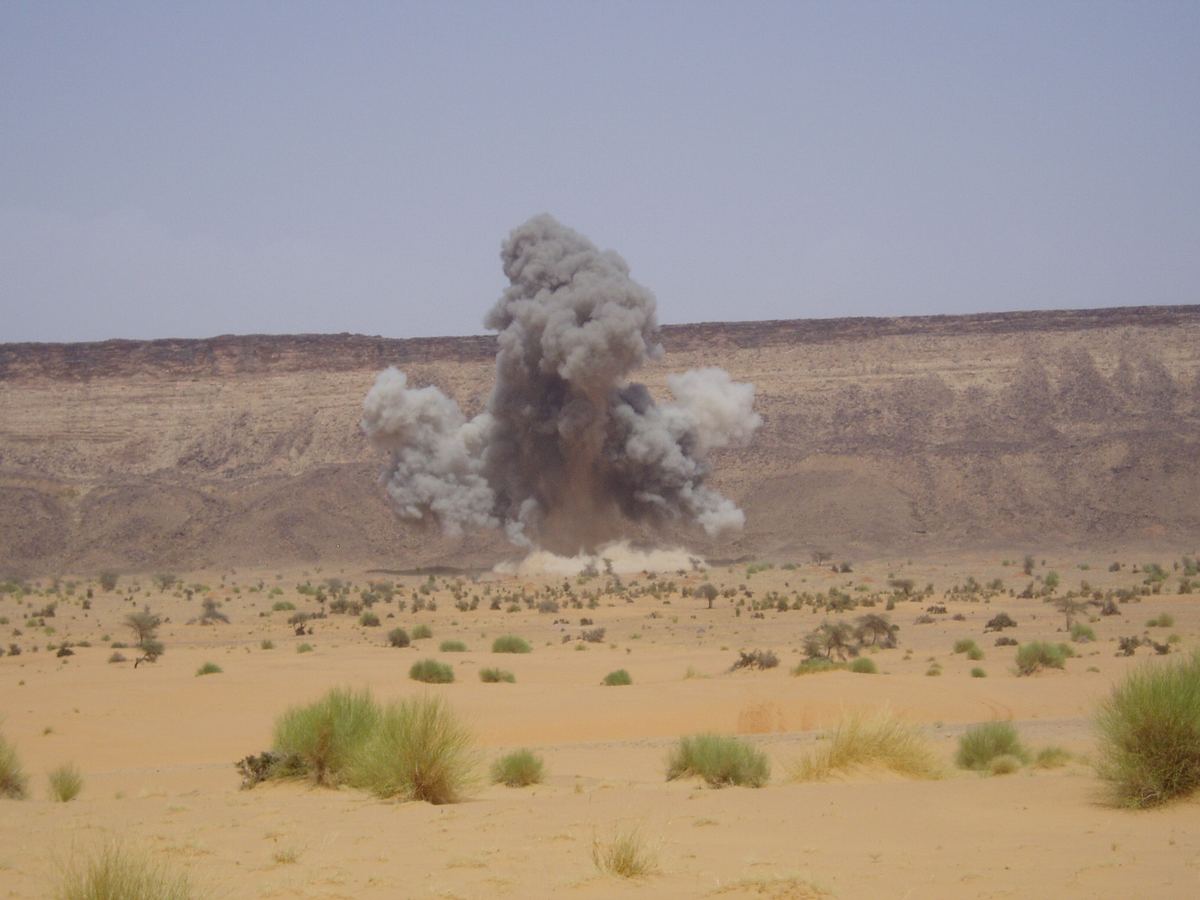
Our services for projects in Homs
Historical desk study and non-technical survey (NTS)
Collection and analysis of archives, testimony and field evidence to define suspected hazardous areas before any intervention. Non-technical survey
Technical survey and UXO survey
Geophysical detection (magnetometry, electromagnetics) and ground verification to confirm and locate explosive ordnance, on land or underwater. UXO survey
Battle area clearance and mine clearance
Search, identification and neutralisation or destruction of UXO, mines and improvised explosive devices by qualified EOD operators. Battle area clearance · Mine clearance
Client representation and quality control
Independent supervision, quality assurance and quality control of clearance contractors on behalf of the project owner, and explosive ordnance safety advice on site.
Training and stockpile management (PSSM)
EOD training, physical security and stockpile management assessments and destruction of surplus ammunition, through the group company GEODE. Stockpile destruction and PSSM
Underwater works
Survey and clearance in ports, rivers and offshore areas with the group company SEMTEC.
Why the DEMINETEC Group?
- ISO 9001, ISO 14001, ISO 45001 and MASE certified.
- Group pre-qualified by UNOPS in 14 disciplines since 2023.
- Experts who have worked in 34 countries, through GEODE (Global EOD Experts) for mine action and SEMTEC for underwater works.
- Teams of former French Navy and Army EOD operators.
- Onshore and underwater capacity within one group.
The DEMINETEC Group and Syria
The group’s experts carried out clearance, demining and training missions in Syria in 2018 and 2019. Any engagement in Syria is subject to prior verification of the applicable international sanctions and export-control rules.
See the international references of the group.
Conflict history and explosive contamination in Homs
The siege of Homs ran from May 2011 to May 2014. After an attack on army checkpoints on 3 February 2012, Syrian government forces bombarded opposition-held districts with tanks, helicopters, artillery, rockets and mortars; the 4th Armoured Division sent tanks and infantry into Baba Amr, which was secured on 1 March 2012. A UN-brokered ceasefire took effect on 14 April 2012, but shelling of Jouret al-Shayah was reported the same day. On 5 October 2012, warplanes, tanks and artillery struck the Old City, Khalidiya, Qusour and Jouret al-Shayah, and Deir Baalba was captured in December 2012. Hezbollah reinforced government forces in spring 2013, and Khalidiya was captured in late July 2013.
The Old City then remained under siege. On 7 February 2014, a three-day truce under UN auspices allowed civilians to be evacuated from the besieged neighbourhoods. A ceasefire agreement followed on 2 May 2014, and the evacuation of opposition fighters towards the northern countryside began on 7 May, returning the Old City to government control. UN-Habitat reported deaths from unexploded items in the week after the ceasefire. The western district of al-Waer stayed besieged; the evacuation of fighters and their families to Jarabulus started on 18 March 2017 and the siege ended on 21 May 2017. After the Assad government fell in December 2024, Mine Action Review noted that access for survey and clearance generally improved across the country.
Areas and structures concerned
- Baba Amr
- Al-Waer
- Al-Khalidiya
- Al-Hamidiya
- Bab Houd
- Jouret al-Shayah
- Al-Qusour
- Deir Baalba
Expected ordnance and implications for survey
The weapons documented in Homs city were mostly ground-launched: tank rounds, artillery shells, rockets and mortars fired into Baba Amr and the Old City, joined by helicopter and aircraft strikes in 2012. Mine Action Review reports anti-personnel mines, many improvised, UXO and victim-activated IEDs across Syria, and a joint SARC and ICRC assessment covering nine governorates including Homs found explosive ordnance in 92 per cent of surveyed communities. Survey has to deal with multi-storey rubble, collapsed structures and rural land with incomplete records.
FAQ: explosive risk in Homs
Is the Old City of Homs safe to rebuild without survey?
No. UN-Habitat's 2014 profile described the risk of unexploded items in the Old City as extremely alarming and reported deaths in the week after the May 2014 ceasefire. It estimated 37,700 units heavily damaged or destroyed, which means large volumes of rubble in which shells and mortar bombs can remain. Debris removal should follow explosive ordnance survey.
How many explosive ordnance accidents has Homs governorate recorded since December 2024?
A 2026 UNOPS notice, citing the Mine Action Area of Responsibility, gives 125 explosive ordnance accidents in 14 sub-districts between 8 December 2024 and 30 May 2026, causing more than 249 casualties. The notice describes Homs governorate as among Syria's most heavily mine-contaminated areas and one of the most affected governorates nationwide.
Has Homs governorate been fully surveyed?
No. According to the 2026 UNOPS notice, non-technical survey has reached 12 of the 23 sub-districts, including Al-Qusayr, Tall Kalakh, Homs, Qaryatein and Taldu, and remains incomplete there. No information exists for the other 11, among them Tadmor, Sokhneh, Ar-Rastan and Talbiseh. Mine Action Review adds that no comprehensive countrywide survey has been conducted.
Sources: Mine Action Review — Clearing Cluster Munition Remnants 2026: Syria · Mine Action Review — Clearing the Mines 2025: Syria · UNOPS (UN Global Marketplace) — Notice 304632: mine action call for proposals, Homs governorate · UN-Habitat — Neighbourhood profile: Old City of Homs (2014) · Wikipedia — Siege of Homs · Wikipedia — 2012 Homs offensive
Territorial coverage
Homs city and Homs governorate, including Al-Qusayr, Tall Kalakh, Ar-Rastan, Talbiseh, Qaryatein and Tadmor (Palmyra). Teams and equipment are mobilised to fit each mission: documentary studies, short field surveys or long-duration clearance operations.
Other city pages for the Middle East and Libya: Baghdad · Erbil · Mosul · Tripoli · Misrata · Sirte · Benghazi · Damascus · Hama · Aleppo · Raqqa · Palmyra · Beirut · Amman
Frequently asked questions about UXO clearance in Homs
Which standards apply to explosive ordnance clearance in Syria?
Mine action in Homs falls under the Syrian National Mine Action Centre (SNMAC), created in August 2025 within the Ministry of Emergency and Disaster Management and designated central coordination body in March 2026. National standards are still in draft, due for finalisation by the end of 2026, and UNMAS uses the International Mine Action Standards (IMAS) as the baseline for operational accreditation. Without a tasking authority, UNMAS issues task orders to its implementing partners. Mine action is coordinated with the UN through the UNMAS-led Mine Action Area of Responsibility, and operators must comply with applicable international sanctions and export-control rules.
What does a project owner need before starting works in Homs?
A historical desk study and a non-technical survey to define the hazard, then a technical survey or UXO survey of the project footprint, clearance where evidence of contamination is found, and a handover document stating the areas and depths treated. The scope depends on the site history and on the depth of the works.
How long does a mission take?
Duration depends on the area, the search depth and the density of contamination: from a few weeks for a desk study to several months or more for clearance operations on major projects.
Does the group work underwater?
Yes. Through the group company SEMTEC, the group carries out commercial diving, underwater magnetometry and neutralisation of submerged ordnance in ports, rivers and coastal areas.
Contact the DEMINETEC Group about Homs
For any desk study, survey or clearance request, contact our teams:
DEMINETEC SAS285 avenue Marcel Paul
83500 La Seyne-sur-Mer, FRANCE
Tel: +33 9 52 51 00 63
Email: contact@deminetec.com