
UXO clearance, EOD training and PSSM in Lomé
Explosive ordnance risk management in Togo – DEMINETEC GroupExplosive ordnance, mines and ammunition stockpiles: Lomé, Togo
The DEMINETEC Group supports public authorities, international organisations and private clients with programmes and projects run from Lomé, Togo: historical desk study, non-technical and technical survey, UXO and mine clearance, EOD training, and physical security and stockpile management (PSSM) of ammunition. The group has worked in 34 countries and operates to the International Mine Action Standards (IMAS), the International Ammunition Technical Guidelines (IATG), the requirements of the national authorities and the contract specifications.
In short.
- Togo has reported no mined areas, and no contamination by explosive remnants of war is documented in Lomé, on the coast.
- The documented risk lies in the Savanes region, in the far north, where improvised explosive devices have been reported since 2022.
- Ammunition stockpiles fall under the Ministry of the Armed Forces and the general staff; the CNLPAL coordinates action against small arms proliferation.
Explosive ordnance context of Lomé and Togo
No contamination is documented in Lomé: the sources consulted report neither minefields nor former battle areas requiring clearance in the capital. Togo has reported no mined areas under its jurisdiction and states that it has never used, produced, imported or exported anti-personnel mines. The country’s explosive risk is recent and localised: since 2022, the use of improvised mines by non-state armed groups has been reported in the north, causing military and civilian casualties.
The recorded incidents concern the Savanes region, bordering Burkina Faso: first Kpendjal prefecture, then Oti prefecture, where a tricycle struck a device at Bonzougou, near Mango, on 18 June 2024. Landmine Monitor 2025 cautiously attributes these devices to the Group for the Support of Islam and Muslims (JNIM). Lomé has hosted the United Nations Regional Centre for Peace and Disarmament in Africa (UNREC) since January 1986, and the NGO MAG has supported stockpile management since 2018.
For a project run from Lomé, the question has two parts. On the coast, where no contamination is documented, the issue is mainly depot safety: the national baseline assessment of December 2021, carried out with ECOWAS and UNIDIR, notes the need to rehabilitate storage sites and the risks to people living close to them. In the Savanes region, rural roads, farm tracks and infrastructure or mineral exploration worksites call for a prior analysis of the threat from improvised devices.
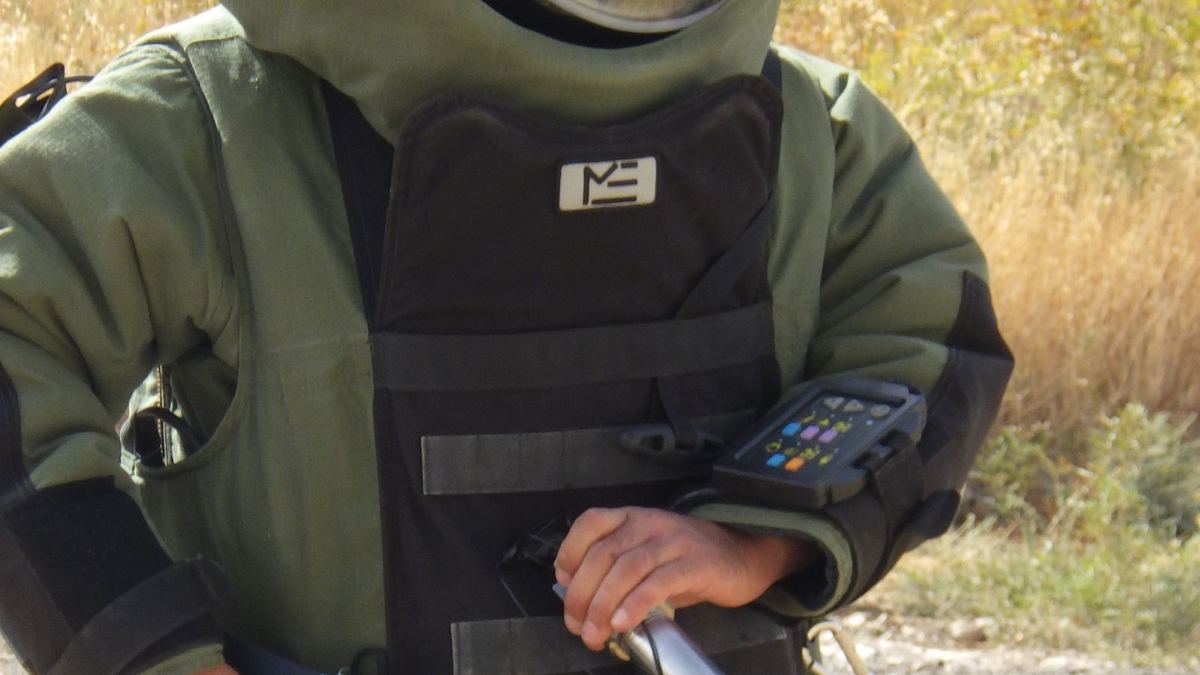
Our services for projects in Lomé
Historical desk study and non-technical survey (NTS)
Collection and analysis of archives, testimony and field evidence to define suspected hazardous areas before any intervention. Non-technical survey
Technical survey and UXO survey
Geophysical detection (magnetometry, electromagnetics) and ground verification to confirm and locate explosive ordnance, on land or underwater. UXO survey
Battle area clearance and mine clearance
Search, identification and neutralisation or destruction of UXO, mines and improvised explosive devices by qualified EOD operators. Battle area clearance · Mine clearance
Client representation and quality control
Independent supervision, quality assurance and quality control of clearance contractors on behalf of the project owner, and explosive ordnance safety advice on site.
Training and stockpile management (PSSM)
EOD training, physical security and stockpile management assessments and destruction of surplus ammunition, through the group company GEODE. Stockpile destruction and PSSM
Underwater works
Survey and clearance in ports, rivers and offshore areas with the group company SEMTEC.
Why the DEMINETEC Group?
- ISO 9001, ISO 14001, ISO 45001 and MASE certified.
- Group pre-qualified by UNOPS in 14 disciplines since 2023.
- Experts who have worked in 34 countries, through GEODE (Global EOD Experts) for mine action and SEMTEC for underwater works.
- Teams of former French Navy and Army EOD operators.
- Onshore and underwater capacity within one group.
The DEMINETEC Group and Togo
The group’s experts worked in Togo in 2021 and 2022 (assessment and expertise, stockpile management – PSSM).
See the international references of the group.
Conflict history, explosive ordnance and ammunition stockpiles in Togo
Togo has not experienced a war that left widespread contamination. The explosive risk stems from the southward spread of insecurity from the Sahel. On the night of 10 to 11 November 2021, and again on the night of 10 to 11 May 2022, two attacks targeted the military positions of Operation Koundjoare in the north of the country; the second left 8 dead and 13 wounded on the Togolese side, according to the government. On 13 June 2022, a security state of emergency was declared in the Savanes region. Since 2022, the use of improvised mines by non-state armed groups has been reported there, with military and civilian casualties, including children travelling by cart.
On 18 June 2024, at Bonzougou, 22 kilometres from Mango, a tricycle returning from the fields struck an improvised explosive device; four civilians were reportedly killed according to the Togolese press, which describes it as the first attack reported in Oti prefecture. On 14 September 2025, five members of a Burkinabe refugee family were killed at Tonloni, in the Savanes region, by a device that hit their cart. Togo signed the Ottawa Convention on 4 December 1997 and ratified it on 9 March 2000, with entry into force on 1 September 2000; it ratified the Convention on Cluster Munitions on 22 June 2012. No Article 5 deadline currently applies to it.
Areas and sites concerned
- Savanes region (far north)
- Kpendjal prefecture
- Tonloni (Savanes region)
- Bonzougou, Mango canton (Oti prefecture)
- Dapaong
- Border area with Burkina Faso
- Lomé (seat of UNREC, weapons-marking kits)
Expected ordnance and implications
The explosive ordnance documented in Togo consists of improvised explosive devices (IEDs), including victim-activated improvised mines, laid on rural routes in the north. No manufactured mines are reported and the country states that it holds no cluster munitions. In addition, there is ammunition awaiting disposal in national stockpiles: in 2021 two destruction sites existed, one in the north and one in the south, using open burning or open detonation. A preliminary study therefore separates the threat from improvised devices in the Savanes region from depot safety elsewhere.
FAQ: explosive risk in Lomé and Togo
Is Lomé affected by contamination from mines or unexploded ordnance?
No, according to the sources consulted. Togo has reported no mined areas, and no contamination by explosive remnants of war (ERW) is documented in Lomé. The capital is, however, concerned by stockpile management: in December 2021 three mobile weapons-marking kits were located there, and the national assessment noted the need to rehabilitate storage sites.
Where is the risk from improvised explosive devices documented in Togo?
In the Savanes region, on the border with Burkina Faso. Kpendjal prefecture is the most frequently cited; one incident was reported further south, in Oti, at Bonzougou, on 18 June 2024, and five civilians were killed at Tonloni on 14 September 2025. A security state of emergency was declared in this region on 13 June 2022.
Does Togo have clearance obligations under the Ottawa Convention?
Togo has been a State Party since 1 September 2000 and has reported no mined areas; no Article 5 clearance deadline therefore applies to it. Landmine Monitor notes, however, that victim-activated improvised devices are regarded as improvised mines, which fall under the treaty’s prohibition and clearance obligations.
Sources: Landmine and Cluster Munition Monitor — Togo, Mine Ban Policy · Landmine and Cluster Munition Monitor — Togo, Cluster Munition Ban Policy · Landmine and Cluster Munition Monitor — Landmine Monitor 2025 · UNIDIR — La gestion des armes et des munitions, aperçu de pays : Togo · République Togolaise (site officiel) — L’état d’urgence sécuritaire instauré dans les Savanes · L’Alternative — Togo, Mango/Bonzougou : 4 personnes victimes d’une attaque à engin explosif improvisé · UNREC (Bureau des affaires de désarmement des Nations Unies) — About
Territorial coverage
Area concerned: Lomé and Greater Lomé, in the Maritime region, and, to the north, Mango, Dapaong, Kpendjal prefecture and the whole of the Savanes region. Teams and equipment are mobilised to fit each mission: documentary studies, short field surveys or long-duration clearance operations.
Other African capital and city pages: Bamako · Niamey · Ouagadougou · N’Djamena · Yaoundé · Malabo · Porto-Novo · Bissau · Addis Ababa · Luanda · Tripoli
Frequently asked questions about explosive ordnance services in Lomé
Which framework applies to mine action and ammunition management in Togo?
As no mined areas have been reported, the sources consulted do not describe a national mine clearance programme in Togo. The National Commission to Combat the Illicit Proliferation, Circulation and Trafficking of Small Arms and Light Weapons (CNLPAL), created by decree on 19 March 2001 and attached to the Presidency, coordinates this field with the Ministry of the Armed Forces, which manages the stockpiles. Togo is party to the Ottawa Convention and the Convention on Cluster Munitions, and applies the ECOWAS Convention on Small Arms and Light Weapons. Technical references: IMAS, and the IATG for stockpiles.
What does a project owner or programme manager need before starting in Lomé?
For works: a historical desk study and a non-technical survey to define the hazard, then a technical survey or UXO survey of the project footprint, clearance where evidence of contamination is found, and a handover document. For ammunition stockpiles: an assessment of the storage sites against the IATG, a risk-reduction plan, training, and the destruction of unserviceable ammunition.
How long does a mission take?
Duration depends on the area, the search depth and the density of contamination: from a few weeks for a desk study to several months or more for clearance operations on major projects.
Does the group work underwater?
Yes. Through the group company SEMTEC, the group carries out commercial diving, underwater magnetometry and neutralisation of submerged ordnance in ports, rivers and coastal areas.
Contact the DEMINETEC Group about Lomé
For any desk study, survey or clearance request, contact our teams:
DEMINETEC SAS285 avenue Marcel Paul
83500 La Seyne-sur-Mer, FRANCE
Tel: +33 9 52 51 00 63
Email: contact@deminetec.com