
UXO clearance, EOD training and PSSM in Bissau
Explosive ordnance risk management in Guinea-Bissau – DEMINETEC GroupExplosive ordnance, mines and ammunition stockpiles: Bissau, Guinea-Bissau
The DEMINETEC Group supports public authorities, international organisations and private clients with programmes and projects run from Bissau, Guinea-Bissau: historical desk study, non-technical and technical survey, UXO and mine clearance, EOD training, and physical security and stockpile management (PSSM) of ammunition. The group has worked in 34 countries and operates to the International Mine Action Standards (IMAS), the International Ammunition Technical Guidelines (IATG), the requirements of the national authorities and the contract specifications.
In short.
- Bissau was declared free of mines in March 2006, but isolated finds of explosive ordnance are still dealt with there, as in 2024.
- At the end of 2024 the country recorded nine confirmed hazardous areas, about 1.05 km², in Oio, Cacheu, Gabú, Quinara and Tombali.
- CAAMI coordinates mine action; the deadline under Article 5 of the Ottawa Convention is set at 31 December 2027.
Explosive ordnance context of Bissau and Guinea-Bissau
Bissau was directly affected by the civil war of 1998–1999: the Brá-Enterramento front line was the main area affected, and the bombardment of the Brá military depot scattered ammunition over a wide area. The capital was declared free of mines in March 2006, and clearance of the Brá depot was subsequently completed. The risk there is now only residual: in 2024, two explosive ordnance disposal spot tasks were still carried out in the Bissau sector.
Elsewhere, contamination is only partly known. At the end of 2024, nine confirmed hazardous areas covered 1,049,611 m² in five regions: Oio (Encheia, Bricama, Cuntima, Demba Dabo), Cacheu, Gabú (Buruntuma), Quinara and Tombali, where anti-personnel mines were confirmed at Medjo and Imbai-Baila; 51 suspected areas were also recorded. The National Mine Action Coordination Centre (CAAMI) coordinates; the NGO MAG worked with the national operators HUMAID and NADEL until its office closed in January 2025 for lack of funding.
From Bissau, any project located in the inland regions must therefore check the status of recorded areas with CAAMI: the national non-technical survey is not complete and explosive remnants of war are considered more widespread than mines. Several recorded areas lie close to the borders with Senegal (São Domingos, Farim) and Guinea (Buruntuma). Depot safety is a further issue: accidental explosions were recorded at Brá in 1998 and at Cufar in 1995 and 2000, and The HALO Trust has supported the armed forces since November 2017.
Our services for projects in Bissau
Historical desk study and non-technical survey (NTS)
Collection and analysis of archives, testimony and field evidence to define suspected hazardous areas before any intervention. Non-technical survey
Technical survey and UXO survey
Geophysical detection (magnetometry, electromagnetics) and ground verification to confirm and locate explosive ordnance, on land or underwater. UXO survey
Battle area clearance and mine clearance
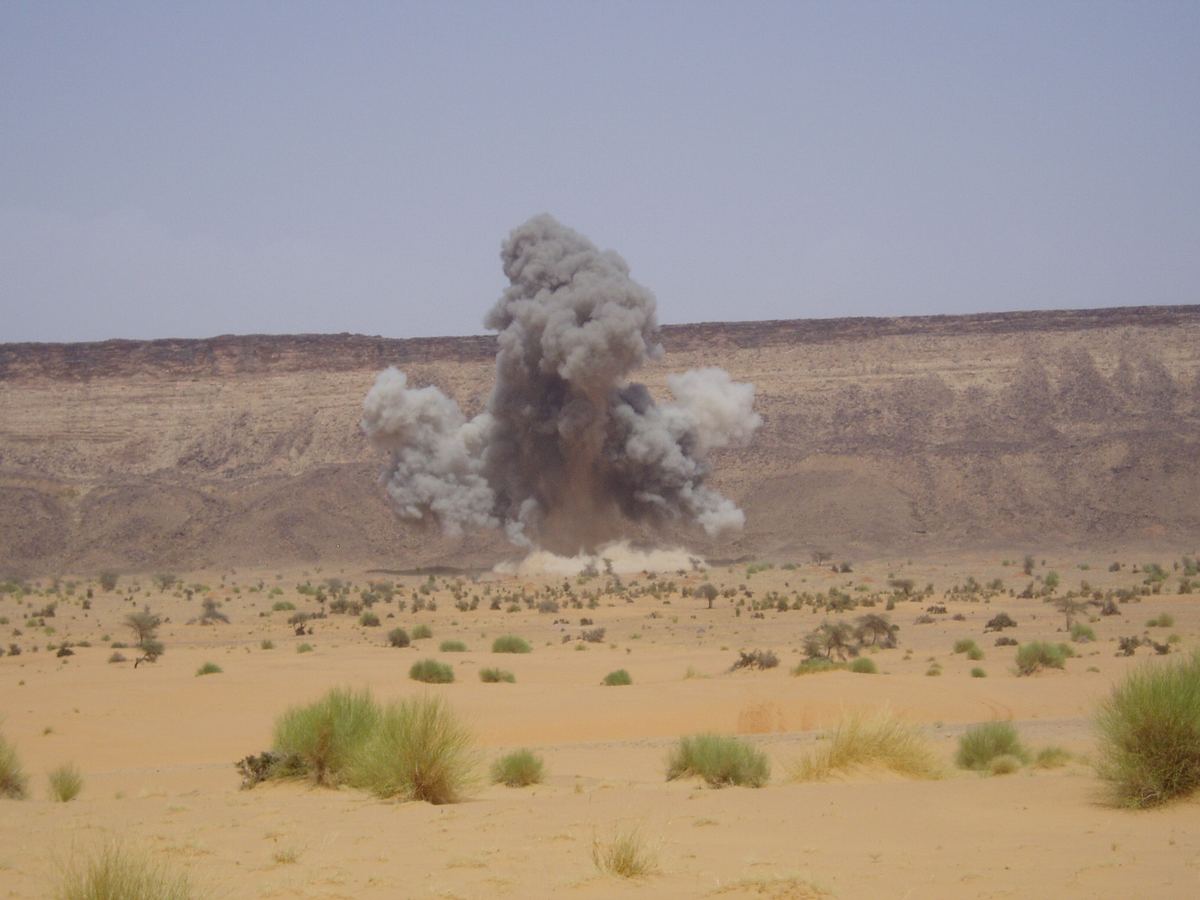
Search, identification and neutralisation or destruction of UXO, mines and improvised explosive devices by qualified EOD operators. Battle area clearance · Mine clearance
Client representation and quality control
Independent supervision, quality assurance and quality control of clearance contractors on behalf of the project owner, and explosive ordnance safety advice on site.
Training and stockpile management (PSSM)
EOD training, physical security and stockpile management assessments and destruction of surplus ammunition, through the group company GEODE. Stockpile destruction and PSSM
Underwater works
Survey and clearance in ports, rivers and offshore areas with the group company SEMTEC.
Why the DEMINETEC Group?
- ISO 9001, ISO 14001, ISO 45001 and MASE certified.
- Group pre-qualified by UNOPS in 14 disciplines since 2023.
- Experts who have worked in 34 countries, through GEODE (Global EOD Experts) for mine action and SEMTEC for underwater works.
- Teams of former French Navy and Army EOD operators.
- Onshore and underwater capacity within one group.
The DEMINETEC Group and Guinea-Bissau
The group’s experts worked in Guinea-Bissau in 2016 (assessment and expertise, stockpile management – PSSM).
See the international references of the group.
Conflict history, explosive ordnance and ammunition stockpiles in Guinea-Bissau
Contamination in Guinea-Bissau dates back to the war of liberation (1963–1974). It worsened during the civil war of 1998–1999, when fighting reached Bissau, and again in March 2006, when a faction of the Movement of Democratic Forces of Casamance laid anti-personnel mines, including improvised mines, and anti-vehicle mines in the north of the country. Guinea-Bissau ratified the Ottawa Convention on 22 May 2001, becoming a State Party on 1 November 2001, and destroyed its last stockpiled anti-personnel mines on 17 October 2005. It ratified the Convention on Cluster Munitions on 29 November 2010.
On 5 December 2012, Guinea-Bissau declared that it had met its clearance obligations: 50 mined areas, about 6.52 km², had been addressed in eight regions, with the destruction of 3,973 anti-personnel mines, 207 anti-tank mines and 309,125 other explosive remnants of war. Accidents nevertheless continued: 13 had been recorded by January 2021, with 73 victims. On 23 June 2021, the country reported the discovery of previously unknown areas. After a ten-year interruption, operations resumed in 2023; in 2024, 227 items of explosive ordnance were destroyed, before a suspension for lack of funding. A fourth extension, granted in November 2024, sets the Article 5 deadline at 31 December 2027.
Areas and sites concerned
- Brá-Enterramento (Bissau)
- Encheia, Bissorã sector (Oio)
- Bricama, Cuntima and Demba Dabo, Farim sector (Oio)
- São Domingos (Cacheu)
- Buruntuma, Pitche sector (Gabú)
- Medjo and Imbai-Baila, Quebo sector (Tombali)
- Gubia, Empada sector (Quinara)
- Cufar (ammunition depot)
Expected ordnance and implications
The documented items are manufactured and improvised anti-personnel mines, anti-vehicle mines, unexploded ordnance (UXO) and ammunition scattered by the bombardment of a depot, as well as old Soviet-made aircraft bombs identified in stockpiles in January 2020. According to the authorities, explosive remnants of war are significantly more widespread than mines. Non-technical survey therefore comes before any technical assessment: the size of 38 suspected areas recorded in 2014 remains undetermined; developing stockpile management procedures is among the needs identified.
FAQ: explosive risk in Bissau and Guinea-Bissau
Is the city of Bissau still contaminated?
Bissau was declared free of mines in March 2006 and the Brá depot, bombarded during the 1998–1999 war, has been cleared. None of the nine hazardous areas confirmed at the end of 2024 is in the capital. Isolated finds do remain, however: an accident was recorded there in May 2014 and two spot tasks dealt with two items there in 2024.
How extensive is contamination in Guinea-Bissau?
It is only partly known. At the end of 2024, nine confirmed hazardous areas totalled 1,049,611 m² in five regions, two of them containing anti-personnel mines in the Quebo sector (Tombali), and 51 suspected areas were recorded. Mine Action Review considers mine contamination to be light but dispersed, with explosive remnants of war more widespread.
Who oversees mine clearance and what is the country’s deadline?
The National Council for Humanitarian Demining (CNDH) sets the strategy; the National Mine Action Coordination Centre (CAAMI) plans, coordinates and carries out quality control. The Article 5 deadline is set at 31 December 2027. Mine Action Review considers that the country is not on track to meet it, as survey was suspended in 2024 for lack of funding.
Sources: Mine Action Review — Clearing the Mines 2025 (chapitre Guinée-Bissau) · AP Mine Ban Convention — Guinée-Bissau, demande de prolongation du délai prescrit à l’article 5 (avril 2024) · AP Mine Ban Convention — Guinée-Bissau, rapport de transparence au titre de l’article 7 pour 2024 · AP Mine Ban Convention — Guinea-Bissau, Article 7 Report (30 April 2010 to 30 April 2011) · GICHD — Ammunition Management Activity Platform (A-MAP), Guinea-Bissau · Landmine and Cluster Munition Monitor — Guinea-Bissau, Mine Ban Policy · Landmine and Cluster Munition Monitor — Guinea-Bissau, Cluster Munition Ban Policy
Territorial coverage
Area concerned: Bissau and its region, then Quinhamel (Biombo), Farim (Oio), São Domingos (Cacheu), Pitche (Gabú) and Quebo (Tombali). Teams and equipment are mobilised to fit each mission: documentary studies, short field surveys or long-duration clearance operations.
Other African capital and city pages: Bamako · Niamey · Ouagadougou · N’Djamena · Yaoundé · Malabo · Lomé · Porto-Novo · Addis Ababa · Luanda · Tripoli
Frequently asked questions about explosive ordnance services in Bissau
Which framework applies to mine action and ammunition management in Guinea-Bissau?
The National Council for Humanitarian Demining (CNDH), chaired by the Minister of Combatants for the Liberation of the Fatherland, sets the strategy; the National Mine Action Coordination Centre (CAAMI) plans, coordinates and carries out quality control. Thirteen national standards, drawn up on the basis of IMAS, were approved in October 2024. Guinea-Bissau is party to the Ottawa Convention, the Convention on Cluster Munitions, and Amended Protocol II and Protocol V of the Convention on Certain Conventional Weapons. For ammunition stockpiles, the international reference remains the IATG.
What does a project owner or programme manager need before starting in Bissau?
For works: a historical desk study and a non-technical survey to define the hazard, then a technical survey or UXO survey of the project footprint, clearance where evidence of contamination is found, and a handover document. For ammunition stockpiles: an assessment of the storage sites against the IATG, a risk-reduction plan, training, and the destruction of unserviceable ammunition.
How long does a mission take?
Duration depends on the area, the search depth and the density of contamination: from a few weeks for a desk study to several months or more for clearance operations on major projects.
Does the group work underwater?
Yes. Through the group company SEMTEC, the group carries out commercial diving, underwater magnetometry and neutralisation of submerged ordnance in ports, rivers and coastal areas.
Contact the DEMINETEC Group about Bissau
For any desk study, survey or clearance request, contact our teams:
DEMINETEC SAS285 avenue Marcel Paul
83500 La Seyne-sur-Mer, FRANCE
Tel: +33 9 52 51 00 63
Email: contact@deminetec.com