
UXO clearance, EOD training and PSSM in Bamako
Explosive ordnance risk management in Mali – DEMINETEC GroupExplosive ordnance, mines and ammunition stockpiles: Bamako, Mali
The DEMINETEC Group supports public authorities, international organisations and private clients with programmes and projects run from Bamako, Mali: historical desk study, non-technical and technical survey, UXO and mine clearance, EOD training, and physical security and stockpile management (PSSM) of ammunition. The group has worked in 34 countries and operates to the International Mine Action Standards (IMAS), the International Ammunition Technical Guidelines (IATG), the requirements of the national authorities and the contract specifications.
In short.
- No mined area is described within Bamako District; the documented risk lies mainly along routes in the centre and north.
- The threat comes first from improvised explosive devices, including victim-activated improvised mines, and from explosive remnants of war of unknown extent.
- Mali does not yet have a national mine action authority: the SP-CNLP coordinates, and only military engineering teams neutralise devices.
Explosive ordnance context of Bamako and Mali
Bamako is not described as a mine-contaminated city: Mali states that no conventional mines have been laid on its territory, and community liaison has identified no minefields. The risk stems from the conflict that began in the north in 2012 and reached the centre from 2016. The capital has nonetheless seen armed attacks, notably on 20 November 2015 and 17 September 2024, as well as two accidental explosions at private storage sites, in 2015 and in 2018.
In 2024, 333 explosive ordnance incidents were recorded across fifteen regions, with 351 victims, mostly in Bandiagara, Ségou and Mopti; Koulikoro region, which surrounds Bamako, accounted for three. Coordination falls to the SP-CNLP, operations to the Military Engineering Directorate and its CCO-NEDEX centre. UNMAS, present from 2013 to 2023 and again from October 2024 to April 2025, withdrew for lack of funding. DCA, MAG and HI deliver risk education and victim assistance.
For a project run from Bamako, the question is less the urban site than the journeys and the footprints in the regions: roads, tracks, wadis and village approaches are where devices are emplaced. Road works, mining sites and energy structures in the centre, the north, then the south and west, call for a review of recent incidents. For depots, support for physical security and stockpile management (PSSM) has been recorded since 2013; a regional workshop took place at CPADD, in Benin, in October 2023.
Our services for projects in Bamako
Historical desk study and non-technical survey (NTS)
Collection and analysis of archives, testimony and field evidence to define suspected hazardous areas before any intervention. Non-technical survey
Technical survey and UXO survey
Geophysical detection (magnetometry, electromagnetics) and ground verification to confirm and locate explosive ordnance, on land or underwater. UXO survey
Battle area clearance and mine clearance
Search, identification and neutralisation or destruction of UXO, mines and improvised explosive devices by qualified EOD operators. Battle area clearance · Mine clearance
Client representation and quality control
Independent supervision, quality assurance and quality control of clearance contractors on behalf of the project owner, and explosive ordnance safety advice on site.
Training and stockpile management (PSSM)
EOD training, physical security and stockpile management assessments and destruction of surplus ammunition, through the group company GEODE. Stockpile destruction and PSSM
Underwater works
Survey and clearance in ports, rivers and offshore areas with the group company SEMTEC.
Why the DEMINETEC Group?
- ISO 9001, ISO 14001, ISO 45001 and MASE certified.
- Group pre-qualified by UNOPS in 14 disciplines since 2023.
- Experts who have worked in 34 countries, through GEODE (Global EOD Experts) for mine action and SEMTEC for underwater works.
- Teams of former French Navy and Army EOD operators.
- Onshore and underwater capacity within one group.
The DEMINETEC Group and Mali
The group’s experts worked in Mali from 2016 to 2020 (training, stockpile management – PSSM).
See the international references of the group.
Conflict history, explosive ordnance and ammunition stockpiles in Mali
On 17 January 2012, a rebellion led by the MNLA and Ansar Dine began in the north; Kidal, Gao and Timbuktu were taken between 30 March and 1 April. The French operation Serval started on 11 January 2013 and MINUSMA became a peacekeeping mission on 1 July 2013. The first explosive device incidents were reported in 2013 on the Gao–Ménaka road, then between Hombori, Gao, Ansongo and Indelimane, before reaching the centre from 2016. A peace agreement was signed on 15 May 2015 by the government, then on 20 June in Bamako by the Coordination of Azawad Movements. From 2013 to 2023, UNMAS recorded 1,630 IED incidents, which killed 1,132 people and injured 2,556.
The French withdrawal was completed on 15 August 2022; the Security Council ended MINUSMA on 30 June 2023. During the pull-back from Kidal to Gao, from 31 October to 7 November 2023, a UN convoy struck six IEDs and 37 peacekeepers were injured. In Bamako, the gendarmerie school and the airport were attacked on 17 September 2024, an action claimed by JNIM; on 25 April 2026, coordinated attacks hit Bamako, Kati and several towns in the north and centre. As for depots, an accidental explosion at a military site in Kati killed six people in 1997. A State Party to the Ottawa Convention since 1 March 1999, Mali passed its Article 5 deadline of 1 March 2009 and in 2026 requested a new deadline of 31 December 2028.
Areas and sites concerned
- Kati and Koulikoro region, around Bamako
- Ségou region
- Mopti and Bandiagara (Bankass and Koro cercles)
- Nara
- Gao–Ménaka road and the Hombori–Ansongo sector
- Kidal region
- Timbuktu
- Sikasso and Koutiala
Expected ordnance and implications
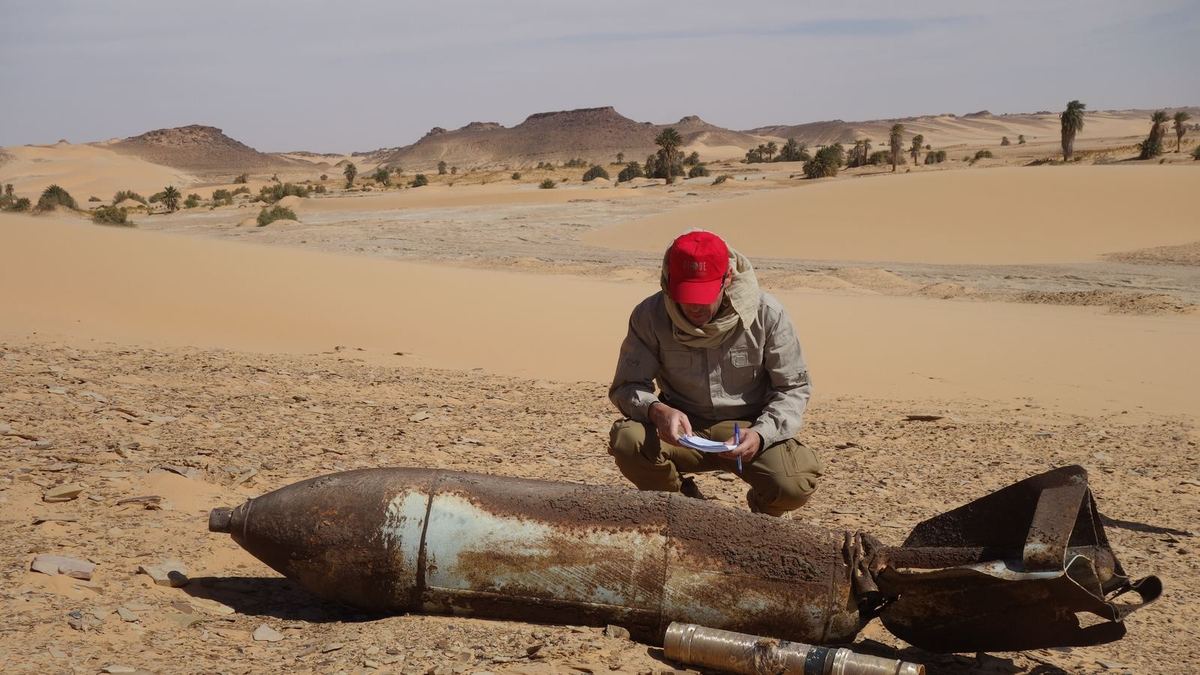
The devices documented are first of all IEDs: pressure-plate improvised mines, increasingly used since 2019, tripwire devices, a growing number of radio-controlled devices and improvised anti-vehicle mines. Explosive remnants of war include grenades, mortar bombs, rockets, shells and aircraft bombs. Contamination is scattered, with no delineated minefield: a survey therefore relies on incident history and community reports. For stockpiles, the recorded accidents justify inventories, controlled storage conditions and depot monitoring.
FAQ: explosive risk in Bamako and Mali
Is Bamako contaminated by mines or unexploded ordnance?
No mined area is described within Bamako District by the sources consulted, and Mali states that no conventional minefield exists on its territory. The capital has seen armed attacks in 2015, 2024 and 2026 and two accidental explosions at private storage sites, in 2015 and 2018. The documented risk is concentrated outside the city.
In which regions of Mali is the risk best documented?
In 2024, recorded incidents were concentrated in Bandiagara (74), Ségou (70), Mopti (37), Nara (31), Kidal (26) and Timbuktu (26), out of 333 in total across fifteen regions. Those who compile the data consider it incomplete. The threat is moving south and west, with incidents in Koutiala, Sikasso and Koulikoro.
Who may neutralise an explosive device found in Mali?
Since MINUSMA left in 2023, only teams of the Malian Armed Forces, under the Military Engineering Directorate and its CCO-NEDEX coordination centre, are authorised to detect and neutralise devices. Humanitarian organisations carry out neither non-technical survey nor clearance: they provide community liaison, marking, risk education and victim assistance.
Sources: Landmine and Cluster Munition Monitor — Mali: Contamination, Land Release & Risk Education · Mine Action Review — Clearing the Mines 2025 (chapitre Mali) · Mine Action Review — Mali, Clearing the Mines 2024 · Convention sur l’interdiction des mines antipersonnel — Analyse de la demande de prolongation du Mali (23e Assemblée des États parties, 2026) · Convention sur l’interdiction des mines antipersonnel — Résumé de la demande de prolongation présentée par le Mali (2026) · GICHD — Ammunition Management Activity Platform (A-MAP), fiche Mali · Wikipédia — Guerre du Mali
Territorial coverage
Bamako District and, in Mali, the towns of Kati, Koulikoro, Ségou, Sikasso, Mopti and Gao. Teams and equipment are mobilised to fit each mission: documentary studies, short field surveys or long-duration clearance operations.
Other African capital and city pages: Niamey · Ouagadougou · N’Djamena · Yaoundé · Malabo · Lomé · Porto-Novo · Bissau · Addis Ababa · Luanda · Tripoli
Frequently asked questions about explosive ordnance services in Bamako
Which framework applies to mine action and ammunition management in Mali?
Mali has no national mine action authority: the Permanent Secretariat of the National Commission against the Proliferation of Small Arms and Light Weapons (SP-CNLP) acts as focal point and is due to receive that mandate. The country ratified the Ottawa Convention on 2 June 1998 and is party to the Convention on Cluster Munitions. National standards on non-technical survey, risk education, victim assistance and quality management had been endorsed by the GT-LAMH working group by May 2023. International references: IMAS and, for stockpiles, the IATG guidelines.
What does a project owner or programme manager need before starting in Bamako?
For works: a historical desk study and a non-technical survey to define the hazard, then a technical survey or UXO survey of the project footprint, clearance where evidence of contamination is found, and a handover document. For ammunition stockpiles: an assessment of the storage sites against the IATG, a risk-reduction plan, training, and the destruction of unserviceable ammunition.
How long does a mission take?
Duration depends on the area, the search depth and the density of contamination: from a few weeks for a desk study to several months or more for clearance operations on major projects.
Does the group work underwater?
Yes. Through the group company SEMTEC, the group carries out commercial diving, underwater magnetometry and neutralisation of submerged ordnance in ports, rivers and coastal areas.
Contact the DEMINETEC Group about Bamako
For any desk study, survey or clearance request, contact our teams:
DEMINETEC SAS285 avenue Marcel Paul
83500 La Seyne-sur-Mer, FRANCE
Tel: +33 9 52 51 00 63
Email: contact@deminetec.com